
Mexico City's Historic Centre is built on a drained lake, on top of a razed Aztec capital, using the stones of the buildings that were pulled down. Every one of those three facts is visible from street level if you know where to look, and invisible if you do not.
This is a guide to looking. Not a list of monuments, but the details that explain why the place is the shape it is.
The city is sinking, and you can measure it by eye
Tenochtitlan was built on an island in a lake. The Spanish drained the lake. The city now sits on soft lakebed clay, and it is pumping drinking water out of the aquifer underneath, so the ground compacts and the buildings go down with it. Parts of the centre have dropped several metres in a century.
They do not sink evenly, which is the interesting part. Stand at the corner of the Metropolitan Cathedral and look along its facade: the line is bent. Walk the nave and the floor rolls. Inside hangs a plumb line, installed to track the tilt, which is a thing you do not expect to find in a cathedral.
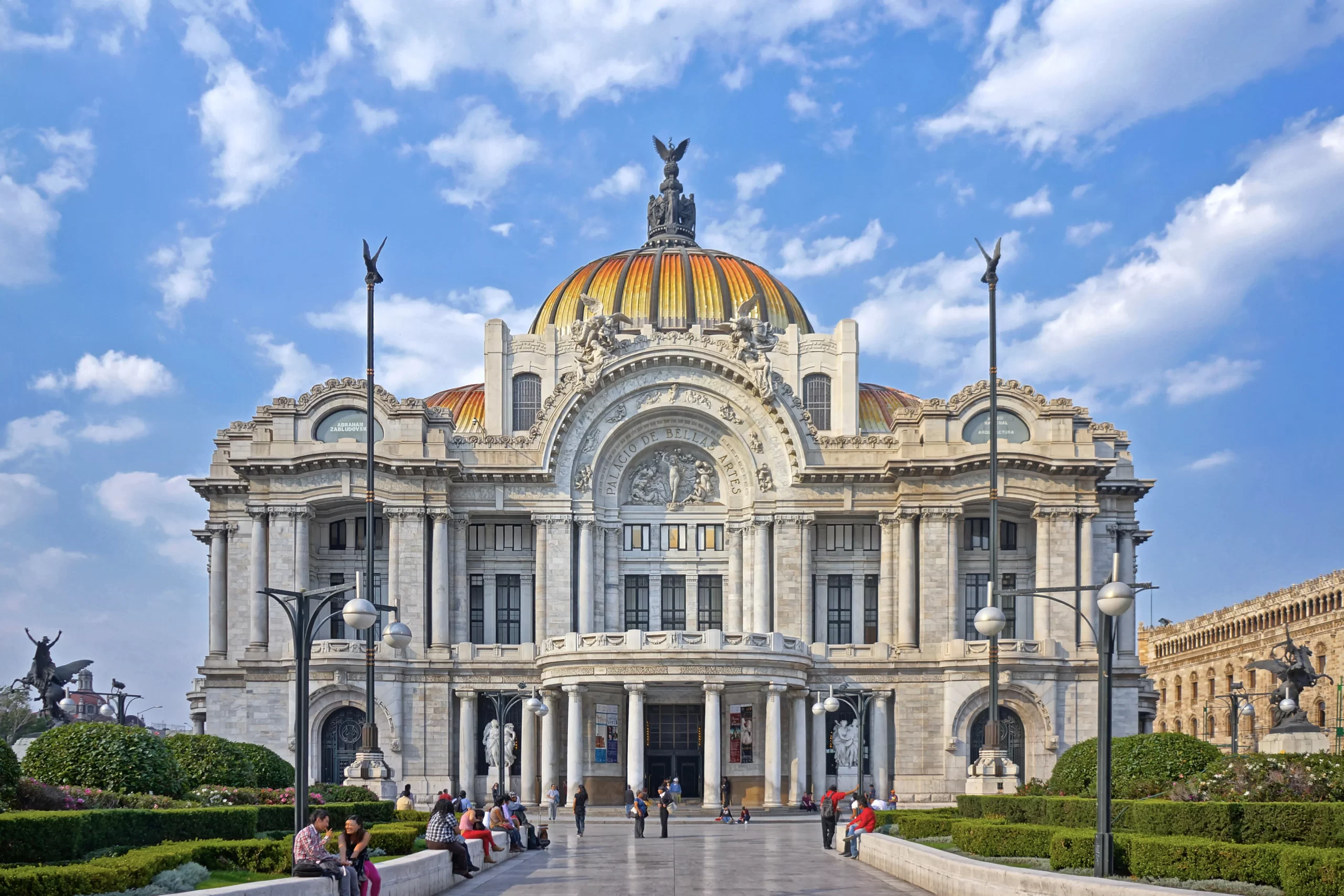
Palacio de Bellas Artes is the clearest case. Its marble is heavy, it was begun before anyone had solved the ground problem, and it has sunk far enough that the entrance that was designed to be reached by steps up is now reached by steps down.
The Aztec city is not buried. It is reused
The Templo Mayor sat where the cathedral and the blocks beside it stand now. It was not just demolished: it was quarried. Colonial buildings around the Zócalo are made of volcanic stone cut for Aztec temples, and in several facades you can pick out blocks carrying pre-Hispanic carving, set sideways or upside down because at that point they were simply stone.
The ruins themselves were only properly uncovered in 1978, when electricity workers digging beside the cathedral hit a carved stone disc eight metres across. Everyone had known roughly where the temple was for four centuries. Nobody had dug.
A post office worth crossing the city for
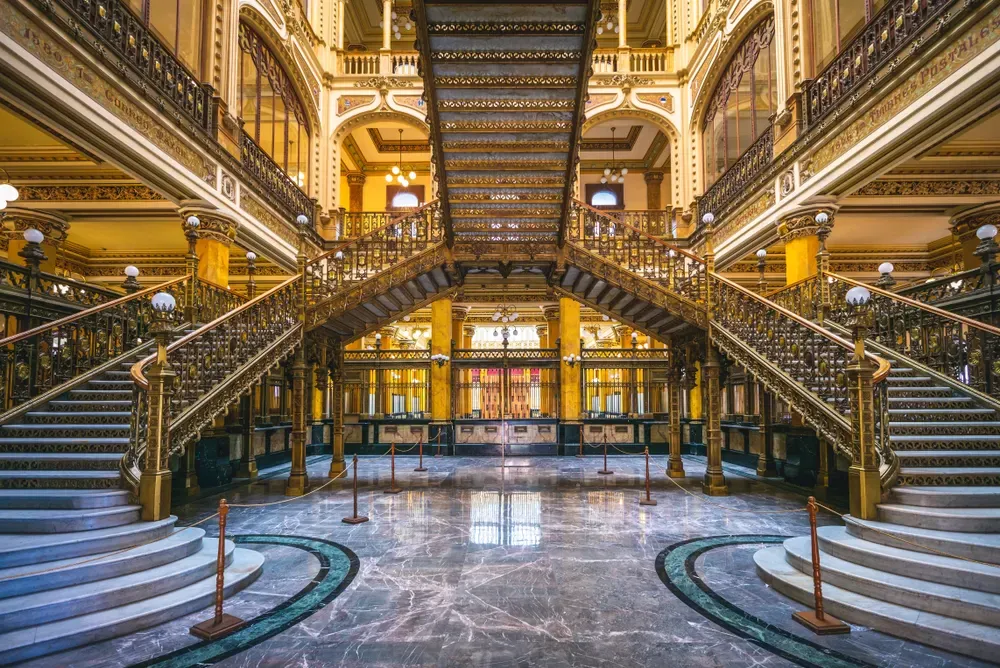
The Palacio Postal is still a working post office. It is also a Venetian-gothic building with a double staircase in cast bronze, made in Florence, shipped over and assembled on site. You can walk in, go up the stairs and buy a stamp. There is no ticket.
It is the clearest example of something that runs through the whole centre: the extraordinary buildings here were not built as monuments. They were a mining office, a post office, a bank. Several still do the job.
Madero and the two facades nobody looks up at
Madero is pedestrianised and busy enough that most people watch the crowd instead of the buildings. Two are worth stopping for. The Casa de los Azulejos is covered entirely in blue and white Puebla tile, inside and out, and operates as a restaurant, so the courtyard is open to anyone. The Torre Latinoamericana at the end survived the 1985 earthquake intact, which for a 1950s skyscraper on lakebed clay is an engineering story rather than luck.
What the Zócalo is actually for
The main square is deliberately empty. No trees, no benches, no fountains. That is not neglect: it is one of the largest public squares in the world and it is kept clear because it is used, constantly, for concerts, protests, ceremonies and markets.
It sits exactly where the Aztec ceremonial precinct was. The National Palace on the east side stands where Moctezuma's palace stood. The continuity is not symbolic; it is the same ground, continuously the seat of power for seven hundred years.
Practical notes
The centre is flat and walkable, and three kilometres at a slow pace covers the essentials. The altitude, 2,240 metres, is what tires people, not the distance. Walk slower than you think you need to on the first day.
Go on a weekday morning if you want the buildings; go on a Sunday if you want the city using them. Both are the real thing, but they are not the same experience. Interiors of the government buildings close earlier than you expect, so start before noon.
Most of what matters here is overhead or underfoot, and almost none of it is labelled. That is the honest argument for a guide: not access, but knowing which of the four hundred facades on your route is the one worth stopping at.
Recommended Experience
“Walk it with a historian who can point at the right stone.”